
How to Deploy Python for Free on MS HOST
Easy, free deployment for Python. Connect GitHub, follow this step-by-step guide, and go live in minutes on MS HOST. See also our deployment solution and FAQ for more help.
Deploying Python shouldn't be complicated
Setting up servers, configuring build pipelines, and managing environment variables takes time away from building your product. MS HOST gives you a free, developer-first platform to deploy Python applications from GitHub in minutes — no DevOps expertise required.
Why deploy Python on MS HOST
Easy, free deployment
Connect your GitHub repo, select Python, and deploy for free. MS HOST handles builds, hosting, and SSL automatically.
- No credit card required
- One-click GitHub integration
- Automatic HTTPS on every deploy
Built for modern workflows
Every push to your branch triggers an automatic build and deployment. Focus on code while MS HOST keeps your Python app live.
- Continuous deployment from Git
- Live build logs in the dashboard
- Zero-downtime redeployments
Production-ready from day one
Environment variables, custom domains, and framework-specific defaults are configured for Python out of the box.
- Secure environment variable management
- Framework-optimized build settings
- Instant rollback from the dashboard
Who uses MS HOST for deployment
Teams and solo developers ship Python projects faster with free, reliable hosting.
Side projects and MVPs
Launch your Python prototype for free and share a live URL with users or investors within minutes.
Production applications
Run real Python workloads with automatic redeployments, environment secrets, and a dashboard to monitor every build.
Overview
Python powers APIs, web apps, and data services worldwide. MS HOST lets you deploy Flask, FastAPI, Django, and other Python applications with minimal setup. Follow this guide to connect GitHub, choose a Python runtime, set your start command, and go live for free on MS HOST.
Setup Requirements
Python 3.10 to 3.13
A requirements.txt or pyproject.toml in your project root
A start command that binds to 0.0.0.0 and your configured port
Step-by-Step Deployment
Name Your Project
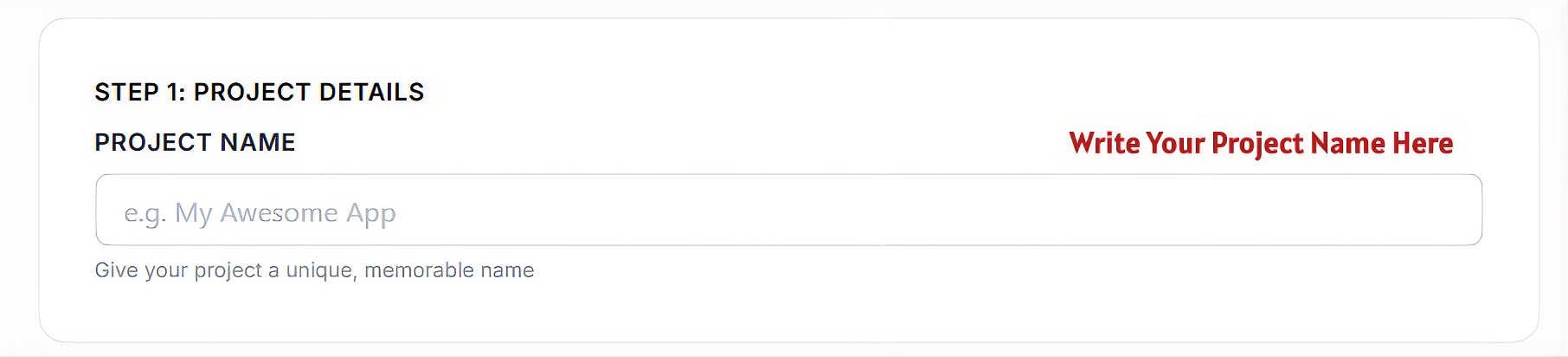
Choose a name to uniquely identify your Python project.
Project Name
Enter a name for your application (e.g., 'Python API' or 'FastAPI Service').
Helper text below the input field ensures your project is easy to identify in the dashboard.
Connect Repository
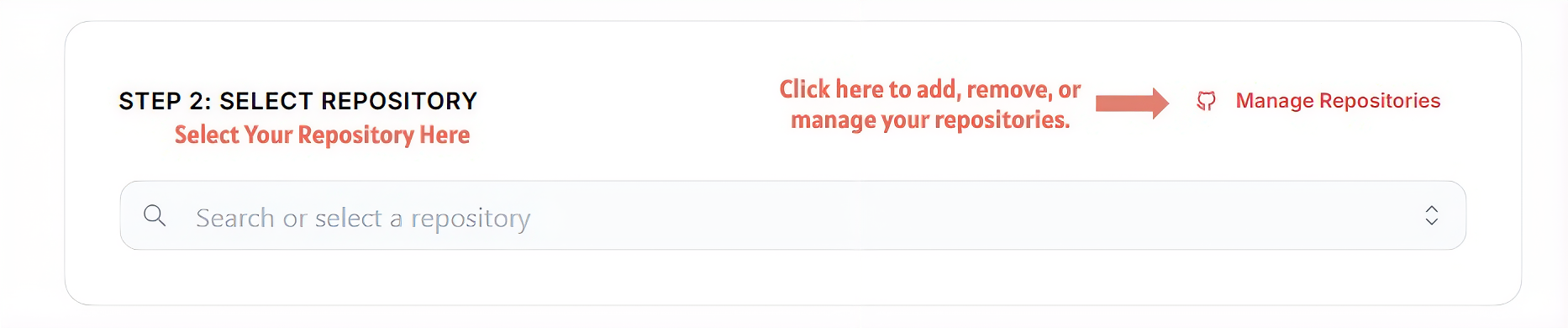
Connect your Python project from GitHub.
Search or Select a Repository
Locate your repository using the dropdown.
Manage Repositories
If your Python repository isn't available, click 'Manage Repositories' to authorize MS HOST to access your personal repos.
Select Framework
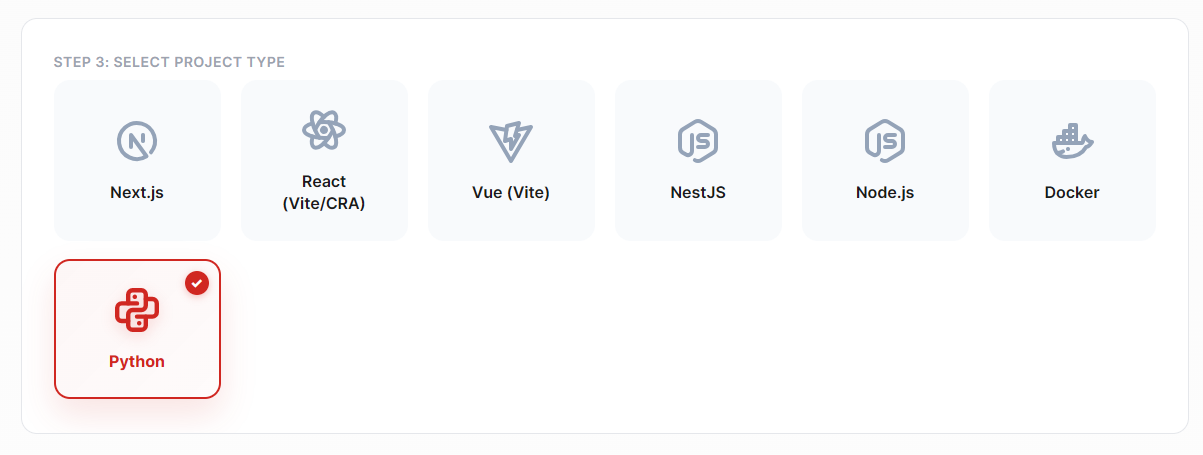
Confirm 'Python' as your runtime framework manually.
Python
Selecting Python prepares the environment for Flask, FastAPI, Django, and other Python deployments with the correct runtime configuration. A checkmark will appear on the card.
Configure & Deploy
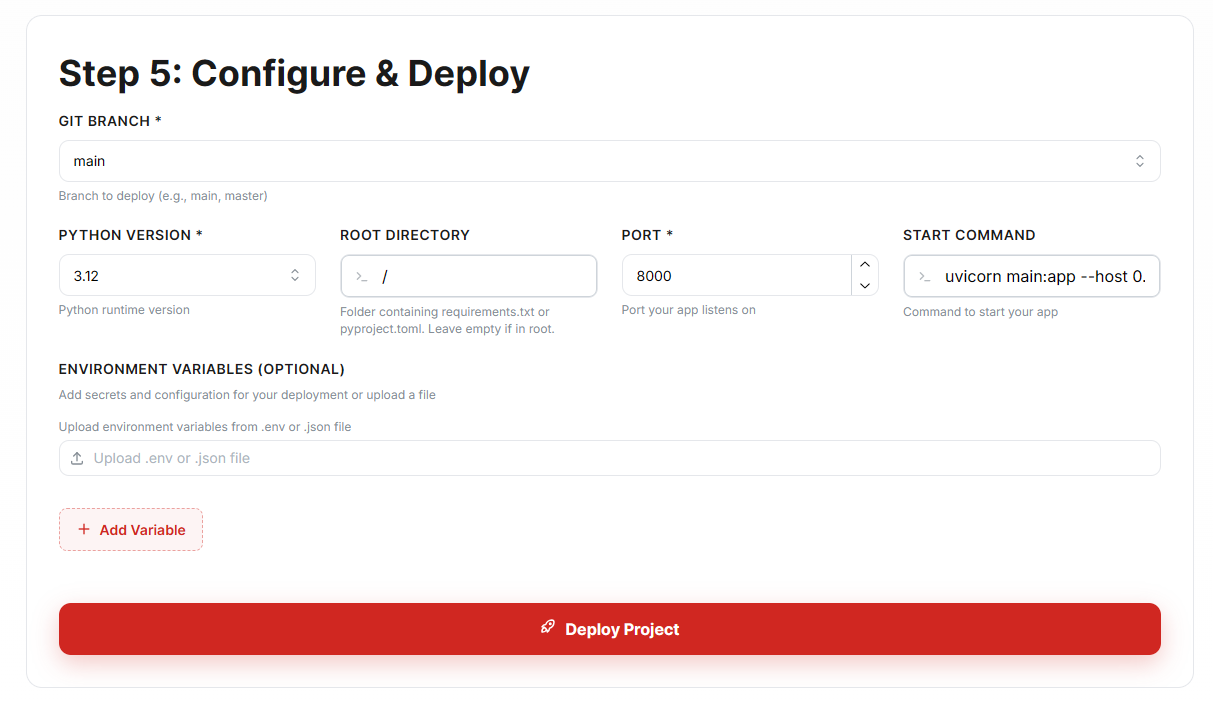
Review and customize your Python runtime settings.
Git Branch
Select the branch for deployment. Every push triggers an automatic redeployment.
Python Version
Choose the Python runtime (e.g., 3.12). MS HOST supports 3.10 through 3.13.
Root Directory
Specify the folder containing your requirements.txt or pyproject.toml. Leave as '/' if your project is in the repository root. Useful for monorepo setups.
Port
The port your Python app listens on (default: 8000). Ensure this matches your start command.
Start Command
The command to launch your app (e.g., `uvicorn main:app --host 0.0.0.0 --port 8000`). Your app must bind to 0.0.0.0 so MS HOST can route traffic.
Environment Variables
Add any configuration values or secrets your Python app needs. You can manually enter these or upload a .env file.
Deploy Project
Click 'Deploy Project' to initiate the deployment. MS HOST will install dependencies and launch your Python process.
Project Dashboard Guide
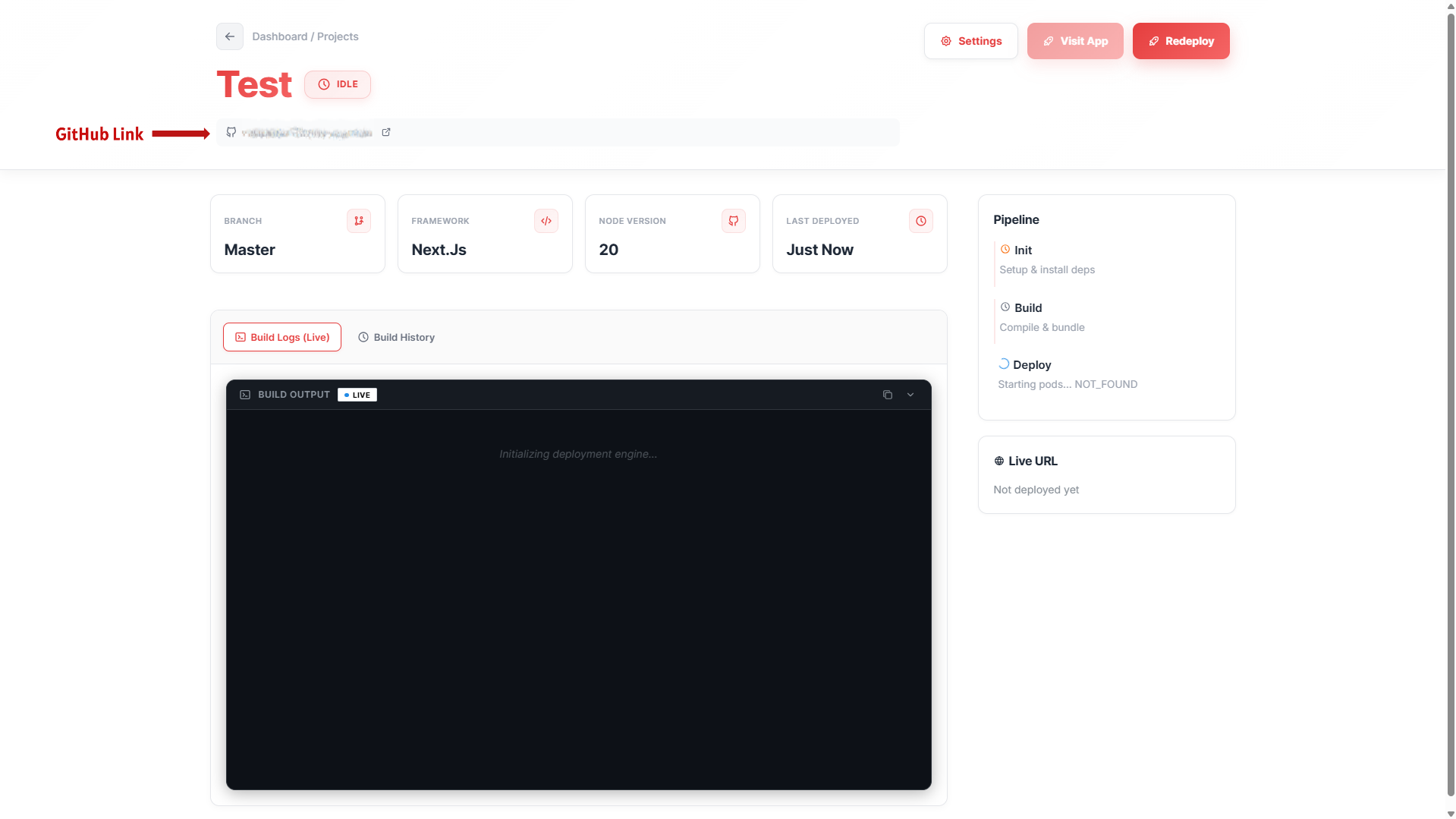
Once your project is deployed, you land on the Dashboard. This central control panel provides real-time insights and management tools for your application.
Project Name & Status
Located at the top-left, this displays your globally unique project name along with a real-time status badge (e.g., IDLE, BUILDING, LIVE, or ERROR) indicating the health of your application.
GitHub Link
Quickly access your source code. The dashboard provides a direct link to your connected GitHub repository and the specific branch currently being served.
Info Cards
Four dynamic cards give you a snapshot of your deployment: the active Branch, the selected Framework, the specific Python Version, and the precise time of the 'Last Deployed' successful build.
Build Logs (Live)
Watch your deployment in real-time. The integrated terminal streams live logs from our build engine, allowing you to monitor dependency installation and startup as it happens.
Pipeline Status
Track the three critical stages of your app's journey: Init (setup & env prep), Build (dependency installation), and Deploy (final orchestration and launch).
Live URL & Management
Once live, your production URL is displayed prominently. From the dashboard, you can also trigger a manual 'Redeploy' or access deep 'Settings' for advanced configurations.
Environment Variables
Manage your application secrets and configuration values. MS HOST provides a secure way to inject these into your runtime environment.
Adding Variables
Use the '+ Add Variable' button in the Configure or Settings screen to add secrets like API keys, database URIs, or internal flags manually.
Bulk Upload
Save time by uploading a `.env` or `.json` file. MS HOST will automatically parse the file and add all variables to your project in one click.
Security First
Never commit your `.env` files to GitHub. MS HOST securely encrypts all stored environment variables and injects them only during the build and runtime.
Automatic Deployment
Every change you push to your branch is automatically built and deployed. Focus on code, while we handle the distribution.
Push to Deploy
Every time you push code to your selected GitHub branch, MS HOST automatically triggers a fresh build and redeploys your application.
Zero Downtime
Our orchestration engine ensures your old version stays live until the new build is 100% healthy, providing a seamless transition with zero downtime.
Manual Redeploy
Need to trigger a build without a code push? Use the 'Redeploy' button on your dashboard to pull the latest code and rebuild immediately.
Updating Project Settings
Your project is not static. You can refine your configuration as your application grows.
Update Configuration
You can change your Python version, start command, port, or root directory at any time from the 'Settings' tab on your project dashboard.
Project Scaling
As your project grows, you can adjust deployment resources and advanced platform settings from your project dashboard.
Tips & Common Mistakes
Bind to 0.0.0.0
Always listen on `0.0.0.0` and use the port configured in MS HOST (or `os.environ.get("PORT", 8000)`). Binding only to localhost will make your app unreachable.
FastAPI / Uvicorn
A common start command is `uvicorn main:app --host 0.0.0.0 --port 8000`. Adjust the module path if your app entrypoint differs.
Flask / Gunicorn
For Flask, use something like `gunicorn app:app --bind 0.0.0.0:8000`. Ensure gunicorn is listed in your requirements.
Django
Use `gunicorn myproject.wsgi:application --bind 0.0.0.0:8000` for production, or `python manage.py runserver 0.0.0.0:8000` for simpler setups. Set `ALLOWED_HOSTS` via environment variables.
Environment Variables
Access MS HOST configuration values using `os.environ`. Secrets and API keys should be added in the Environment Variables section — never commit them to GitHub.
Ready to deploy your Python app?
Join developers using MS HOST for free, easy deployment. Connect GitHub and go live today.